Branding Your F&B Startup Concept: What to Build Before You Ever Touch a Label
Learn how to brand your F&B startup concept from strategy to packaging. A practical guide for early-stage founders building in a $12T market.
Most food and beverage founders make the same costly mistake: they fall in love with a logo before defining what their brand actually stands for. They debate font choices and color palettes, then wonder why customers aren't connecting with the product. Here's the truth: your label isn't your brand. It's the last thing you build.
Branding a Concept vs. Branding a Product
A product exists. A concept is a promise not yet fully formed. At the startup stage, branding a concept means building an identity before your formula is locked, before your SKU count is decided, before shelf placement is even a conversation. Getting this sequence wrong early creates costs that compound all the way to launch.
The most persistent mistake is conflating branding with logo design and packaging. Founders typically invest heavily in product development, supply chain, and shelf negotiations, then treat brand as a final flourish. That sequence is backwards. Concept-stage branding is the work of defining what your brand stands for, who it's genuinely for, and why it exists, none of which a typeface or color palette can answer.
If you delay brand thinking until your product is production-ready, you retrofit identity onto something already fixed. Every formulation and packaging decision made without a brand framework becomes a structural constraint later. Brand equity needs to start building at the pre-seed stage, because it directly drives differentiation, retention, and customer acquisition costs downstream.
A concept-stage brand needs three things a product-stage brand doesn't: a working brand thesis (an argument for why this brand should exist, for this audience, right now, not a tagline), a defined emotional territory, and a cultural frame that tells consumers where to mentally place you. "A matcha-forward wellness drink" is a product description. "A ritual for people who've opted out of hustle culture" is a concept. That concept determines the name, the packaging language, the tone of your Instagram bio, and the communities you build before the product ever hits a shelf.
Brand Strategy Before Visual Identity
Brand strategy answers what every F&B concept must resolve before anything visual begins: what problem you're solving, for whom, in what voice, against which alternatives, with what proof. It's not a logo brief or a color story. It's the structured thinking that makes every creative decision coherent instead of arbitrary. Without it, you're assembling aesthetics, not building a brand.
Founders skip it for understandable reasons: it feels abstract, it produces nothing to show an investor, and nobody is demanding it yet. The manufacturer doesn't require it. The landlord doesn't ask for it. So it gets deferred in favor of the logo and the Instagram grid. The cost surfaces later, and it surfaces expensively: a rebrand at the post-launch stage routinely costs multiples of what the original strategy would have.
A working strategy for an F&B startup needs five components: a positioning statement (who you serve, what you offer, why your position is defensible); a target consumer archetype built on values and behavior, not just demographics; a competitive differentiation rationale; brand personality pillars that govern every piece of communication; and a tone-of-voice guide for packaging, captions, and direct customer interactions. Build these before any visual work starts, and every color and typeface choice carries a rationale instead of a personal preference.
In 2026, consumer skepticism is structurally high. Shoppers read ingredient labels and research brand origins before buying. With the global F&B market projected to exceed $12 trillion by 2035, the competitive density that comes with that scale means undifferentiated brands are simply invisible. At Kook, brand strategy is the first deliverable in every F&B engagement, built collaboratively through structured discovery so it reflects actual business intent rather than a filled-in template.
Naming and Narrative
Naming is the most permanent decision a founder makes. Unlike packaging or a tagline, your name travels across every touchpoint at once: domain, trademark, retailer databases, social handles, and the memory of every first-time buyer. Getting it wrong is a structural problem, not an aesthetic one.
For unfamiliar concepts, the stakes are higher still. A name for a fermented adaptogenic blend or a globally-sourced functional snack can't just describe the contents. It has to do cultural translation, because the buyer has no reference point for your ingredient story. The name needs to create a feeling before it delivers information.
One of the highest-momentum framings for 2026 is what practitioners call newstalgia: blending nostalgic emotional cues, comfort, childhood flavor memory, with novel or globally-sourced ingredients. Think of a product that tastes like something your grandmother made, built from an ingredient she never had. Lean too far into the exotic and you lose the familiar anchor buyers need; lean too far into comfort, and you signal nothing new. Godrej's 2026 food trends research confirms mood-first, nostalgia-driven cues are now primary loyalty drivers in snacking, ahead of functional claims alone.
Brand narrative is the structured story behind your concept's origin and relevance. It's not your tagline; it's the same coherent story living on your About page, your pitch deck, and your packaging side panel. Poor strategy and positioning are among the main reasons F&B startups fail, in a category where roughly 90% don't survive. Narrative written before launch stays consistent. Narrative assembled afterward from press fragments has gaps, and buyers notice.
Before committing to a name, check it against five criteria: pronounceable without instruction, memorable after one encounter, defensible as a trademark, available as a domain and across your core social platforms, and evocative of your emotional territory without locking you into one product format. Naming is a downstream output of completed strategy work, not a starting point. Treating it as a creative exercise before the strategic work is done is one of the most common, and most costly, mistakes early-stage founders make.
Visual Identity: Design for Scroll Before Shelf
In 2026, your customer encounters your brand on a phone screen before they ever pick up the product. Discovery and trust now happen across Instagram feeds and delivery apps as much as retail aisles. A brand identity built for physical packaging and then compressed into digital formats will underperform at every digital touchpoint. Build the system for screens first, then expand it onto packaging as a secondary expression.
A digital-first identity system needs five concrete deliverables: a primary logo with simplified lockup variants for small screens, a motion-ready identity with short animations for Reels and Stories, a color palette that reads clearly on both dark and light UI, a type system legible at caption size, and codified templates for consistent content at volume. Consistent branding across these elements is directly linked to revenue growth, with industry research citing a 10 to 20 percent uplift for brands that maintain coherent visual systems across touchpoints.
Food trends now surface and gain momentum on social media before reaching retail buyers, shaping both demand and wholesale listing decisions. When someone scrolls a delivery app, they scan color, layout, and pattern before reading any text. A brand that looks underdeveloped in that two-second window loses the opportunity entirely.
The most common sequencing error is designing a rich, detailed label first and then trying to adapt it for social use. Fine illustration and complex gradients that look striking at physical scale lose legibility at 150 pixels wide. The stronger process runs the other way: build the digital system first, test it small and in motion, validate it against real social environments, then expand it onto packaging as one expression of an identity you already know performs. Digital iteration is also far cheaper than committing to a packaging print run.
Photography deserves the same rigor. Lighting, surface materials, prop language, and color temperature communicate brand personality as directly as a logo does. Define these choices in your brand guidelines from the start, not shoot by shoot, so every piece of content, internal or external, speaks the same visual language.
Packaging as a Trust Mechanism
Once strategy, identity, and naming are built, packaging is where all of it gets tested at the moment of purchase. Consumers in 2026 are skeptical and quick to move on. They read packaging as both a trust document and a brand expression at once.
Research into 2026 packaging trends identifies four zones of consumer attention. Ingredient lists come first: shoppers scan for minimal, recognizable inputs rather than chemical-sounding additives. Origin and sourcing claims follow, especially for products positioned around quality or heritage. Sustainability credentials are now a near-universal read, scanned habitually by Gen Z and millennial shoppers. Brand story panels on the side or back of the pack have become genuine storytelling space, where authentic design signals honesty over corporate polish.
Clean label design is now a baseline expectation, not a selling point, and sustainability has shifted the same way, from competitive advantage to minimum requirement. Startups still positioning "clean ingredients" as their headline claim are already behind the market. Extended Producer Responsibility regulations are also shaping retailer vendor selection directly, not just consumer sentiment, so a startup that launches with credible environmental values on-pack enters distribution conversations from a stronger position.
The most common structural mistake is treating packaging as a downstream production task. A consumer who finds your brand on Instagram and then picks it up in a store is completing a single trust journey across two surfaces. If the tone feels disconnected between them, that trust breaks. Develop packaging in parallel with your digital identity, with the same information hierarchy on the back panel as the scroll hierarchy online: identity first, values second, story third.
Sequencing the Work
The most common branding error at this stage isn't creative; it's a planning failure. Founders brief a designer before the target consumer is defined, order packaging before naming is final, or build a social presence around a story that will change in three months. Each choice feels reasonable alone; each creates expensive rework when the gaps surface.
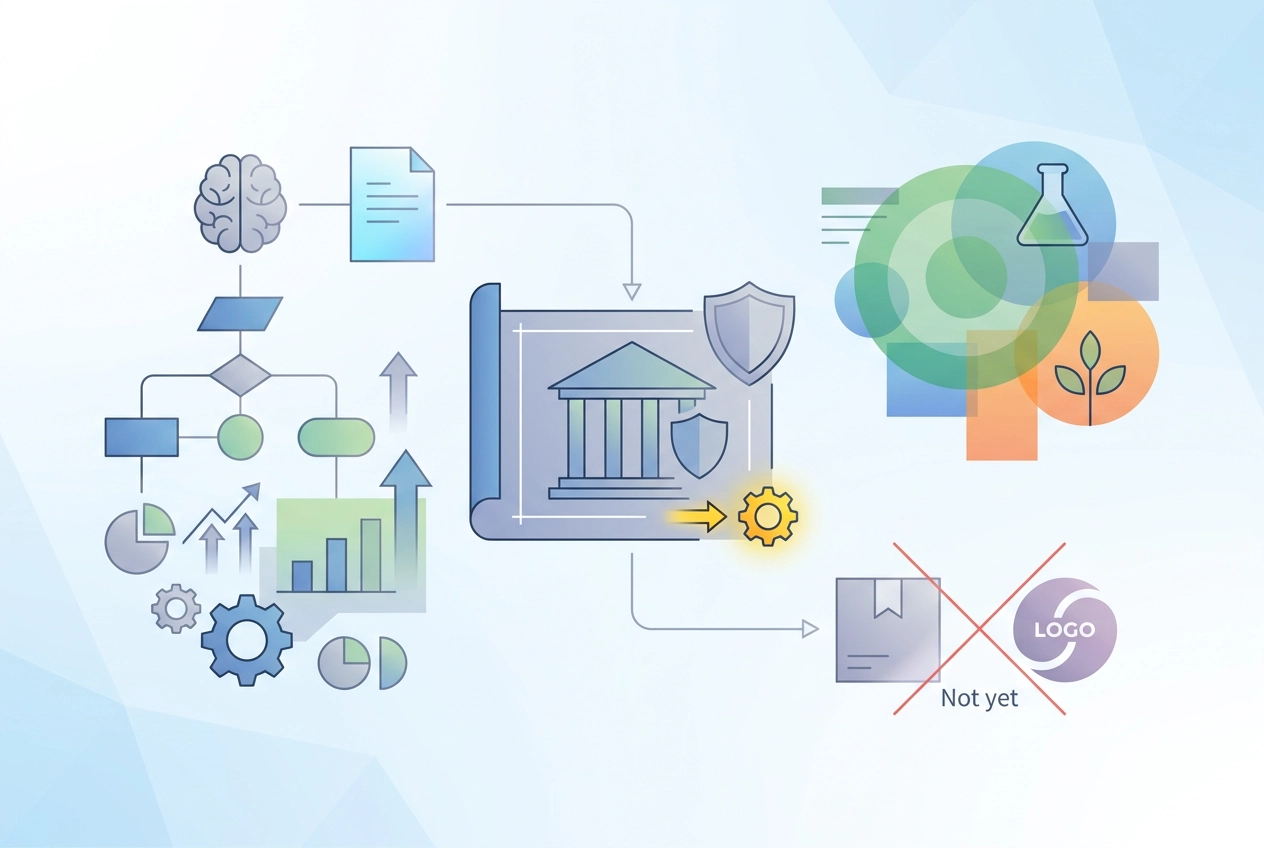
A realistic branding plan moves through five phases, each a direct input to the next:
Brand strategy and positioning. Audience psychographics, competitive landscape, and value proposition get locked here first. Skipping this almost always results in a rebrand within eighteen months.
Naming and narrative. Name decisions made before strategy is set tend to limit the brand rather than express it.
Visual identity system. Logo, color, typography, and graphic language are downstream outputs of phases one and two, not a starting point.
Packaging design. A high-cost physical asset. Errors from premature visual decisions are among the most expensive to correct, especially once retail listings are in motion.
Digital rollout. Social presence, website, and content frameworks deploy the complete brand system rather than previewing an incomplete one.
Full-service branding is a front-loaded investment. The cost of a strong brand is paid once; the cost of a weak one is paid repeatedly, in revisions, eventual rebranding fees, and the opportunity cost of going to market with an identity that doesn't convert. A thorough concept-stage process typically takes eight to fourteen weeks from strategy brief to guidelines handoff. Rushing it produces gaps that surface at the worst moments: a retail buyer pitch, an unsolicited press feature, a launch event.
2026 Trends Worth Building Into Your Concept
Newstalgia: comfort-food formats reimagined with unexpected, globally-sourced ingredients. Identify the familiar emotional category your concept belongs to, then articulate precisely what makes it novel.
Asian-origin formats entering Western markets: hoji, fermented profiles, onigiri, and bao formats are high-momentum directions. Decide early whether you lead with origin authenticity, fusion accessibility, or cultural education, since each requires a different visual language and naming strategy.
Hyper-personal convenience: generic health positioning is losing traction. Consumers align to specific dietary identities and consumption moments. "Healthy for everyone" no longer differentiates.
Sustainability as a retail prerequisite: clean materials and traceable sourcing are now entry-level expectations, not differentiators. Retrofitting a sustainability story after launch carries real authenticity risk.
Data-informed positioning: validating your concept against current trend data before finalizing positioning is now standard practice, not a specialist capability.
Start With the Brand, Not the Label
Branding isn't the finishing touch applied before launch. It's the first structural decision, and every formulation, packaging choice, and marketing move flows from it. NielsenIQ research shows 90% of CPG packaging redesigns fail to create meaningful sales impact, not because the product is inferior, but because the brand foundation was never built. Design can't compensate for a missing strategy.
Before briefing any designer, write a one-page brand thesis answering four questions: what is the purpose of this concept, who is your target consumer and what do they already believe, what emotional territory does your brand occupy, and what's the single feeling you want someone to have the first time they encounter you. That document becomes the brief for everything else.
Sequence your investment in this order: strategy, then naming, then visual identity, then packaging, then digital rollout. Use 2026 trend intelligence to pressure-test your positioning, not to copy what's already gaining traction.
Kook Creative Studio works with F&B founders from first idea through to a fully realized brand identity.